Fire Engine
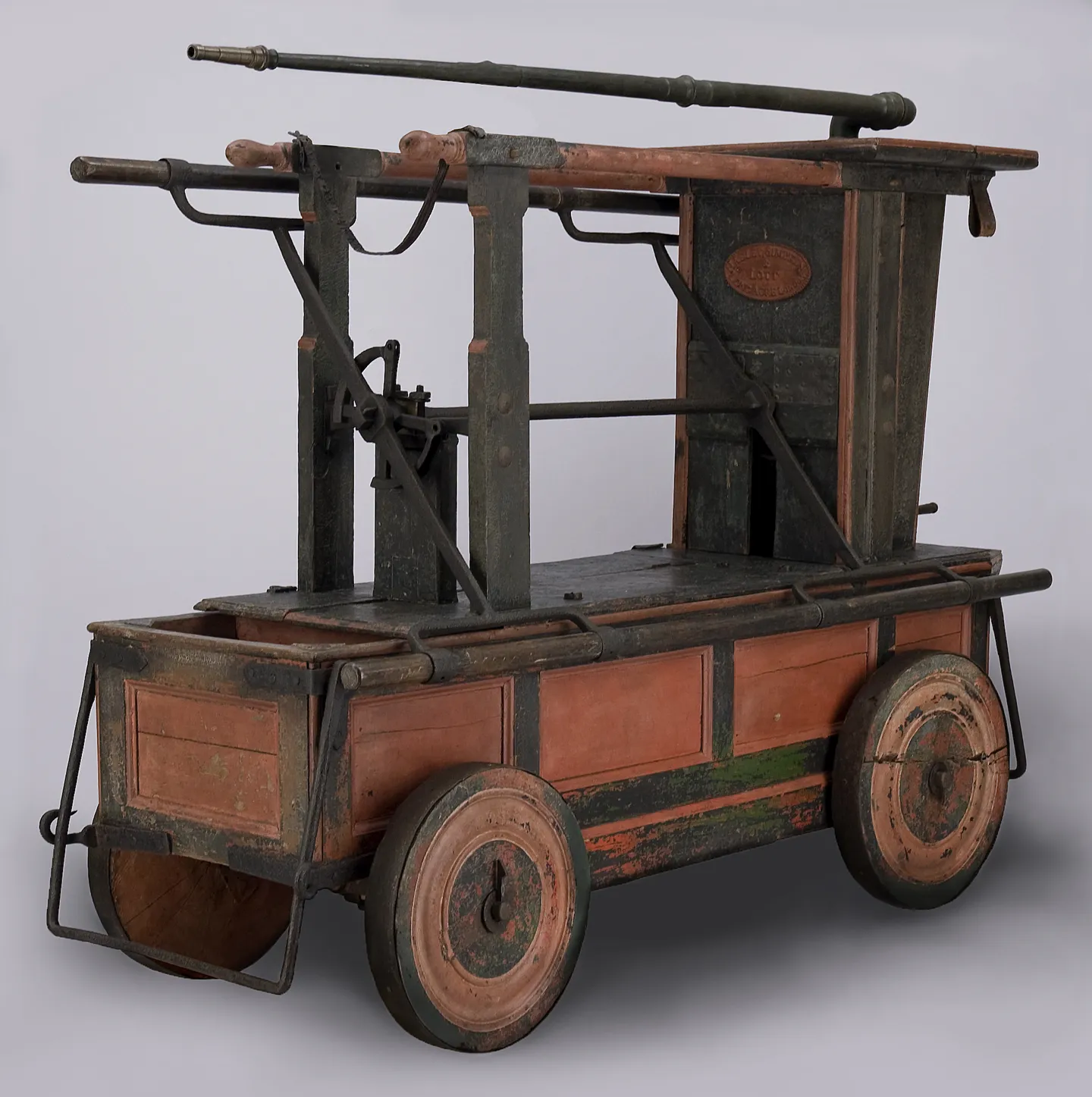
State of the art for its time, this 18th century hand pump fire engine made extinguishing fires, a major hazard of the era, faster and safer
Historical Period
Colonization and Settlementcontributing partner

About
This advanced fire engine was designed by Richard Newsham, a button maker in London, and patented on December 26, 1721. Newsham's "new water engine for quenching and extinguishing fires" significantly advanced firefighting. The fire engine differed greatly from older models because it had a 125 gallon reservoir that could be filled directly from a well rather than the traditional method of filling with buckets of water. It also sprayed water in a continuous stream, while others only sprayed water in spurts. The stream was powerful enough that the water could reach most building roofs and break glass windows to soak the interior.
Start Prepping for Class
Customize this page for your students' needs or grab ready-to-go assets and take it all to class
Fire Engine
Viewing:
Analysis Questions
Foster inquiry and understanding with these source-specific questions, designed to be accessible even for those with limited background knowledge.
say hello to the source
-
1
What do you notice about this object?
-
2
What do you wonder about this object, which is over two hundred years old?
make observations
-
3
What parts does this object have?
interpret what you see
-
4
Do you have any guesses about what this object is?
-
5
This is a hand pump fire engine designed in 1721. It was an important invention that made it much easier to spray water on a fire to put it out. Now that you know what it is, do you have any ideas about how its parts worked?
-
6
What’s the same and what’s different about this fire engine and the fire engines you are familiar with today?
use it as evidence
-
7
At the time that this fire engine was built, house fires were very common and could be extremely destructive and dangerous. What do you know about life in the past that might have made house fires more common long ago?
-
8
Before the invention of fire engines like this one, most fires were put out by throwing buckets of water onto the fire. How do you think the people in the community who purchased this fire engine might have felt? Why?
-
9
Can you think of a tool or machine we use today that makes a hard job easier, just like fire trucks do now?
-
10
In what ways would this fire engine have contributed to the common good of the community where it was used?
Vocabulary
Use these related vocabulary terms to build students’ understanding and support more meaningful discussions and learning outcomes in your classroom.
start customizing
A new way to prep for class
Every source on history.org can now be customized by you! Adjust text, change the layout, add questions, remove others, and style it for every learner in your room — then share or export in one click.
Teach It Your Way
Add context, remove complexity, and adjust the text to match the way you teach.
Style for Your Classroom
Adjust text size, spacing, and structure so the content fits your students' needs.
Spark & Guide Discussions
Scaffold discussion and support for every learner with the language they need to engage.
Build with Vetted Content
Easily pull in additional sources, videos, and context directly from the history.org library.
Citation & Details
Citations
- Creator: Newsham & Ragg
- Date Created: 1744-1765
- Format: Artifact (Object)
- Materials and Measurements: Wood, wrought iron, tinned iron, copper alloys, leather & oil paint. Cylinder interior dia: 5 ¾", Tub width: 21 ¾", Brakes width: 46 ½", Tub length: 90 ¼", Overall max. length: 114 ½", Overall height: 67"
- Point of Origin: London, England
- Object Identifier #: 1960-236,1
Related Educational Videos(1)

Found in These Collections, 2 items

There’s even more for Beta Users
Get Access to Everything
More Primary Sources In:
Colonization and Settlement
Will of Catherine Cornwell, 8 February 1752
Mortar and Pestle Belonging to John Thomas
Mourning Bracelets
Fry-Jefferson Map
Manuscript Map of the Ten Hills - Medford, Massachusetts, October 1637
Surveyor’s Compass, 1730
Embroidered apron

New England Threepence