Page content
View related multimedia and linksHistory of the Gardens
Reproduction bell jar in Colonial Williamsburg garden
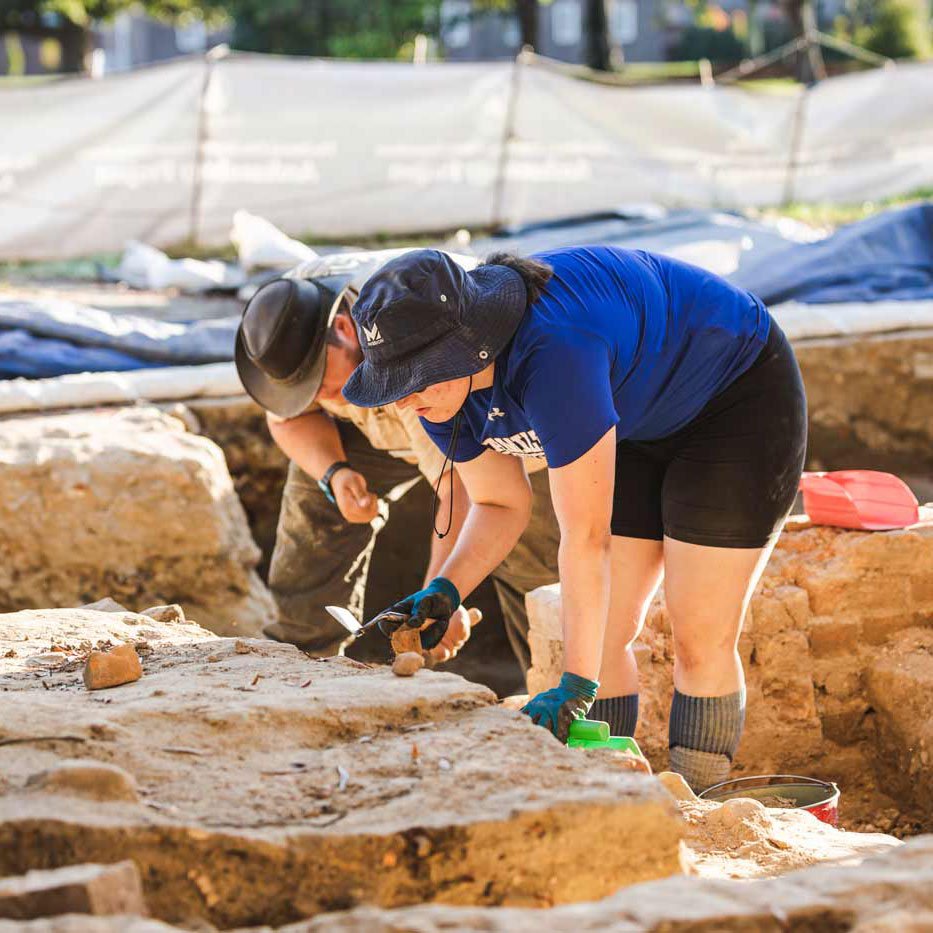
Our re-creation of horticultural practices of the past is based on what we know from artifacts found via archeological investigations, such as pieces of bell jars, (right) and from the depiction of horticultural paraphernalia in the art of the past, such as in the 18th-century print of a lady in an English garden below.
Detail, Earth, Engraver unknown, published by Joseph Read, place unknown, Jan. 8, 1799, hand-colored stipple and line engraving, G1971-3323,1.
Prints such as this give curators clues about the material culture of the periods they investigate. Details such as the lady's hat and the kerchief about her neck allow scholars to date similar objects, or other prints lacking a specific date.
Detail, Spring, Engraver unknown, after a painting by David Teniers, London, 1751, hand-colored line engraving, 1961-170,1.

Calycanthus floridus, Carolina Allspice
Our research into the lives and careers of plant explorers like Mark Catesby (portrayed right) allow us to identify those plants believed to be as similar as possible to those species, native and imported, which were known and used in colonial Tidewater Virginia. Catesby, an English native, spent the better part of his adult years classifying the flora of the New World.
Plant explorers like John Tradescant the Younger, John Clayton, the Rev. John Banister (a protégé of Bishop Compton of London and the rector of Westover Church in Charles City County) and Mark Catesby were amazed at the diversity of flora in the New World and helped to fuel interest in it on the part of their subscribers and patrons in Europe. The plant exchange between the Old and New Worlds was vigorous and resulted in both continents greatly adding to their stocks of cultivated varieties.
Detail, view of the Wren Building and Gardens, Bodleian Plate, maker unknown, c. 1740, copperplate, 1938-196
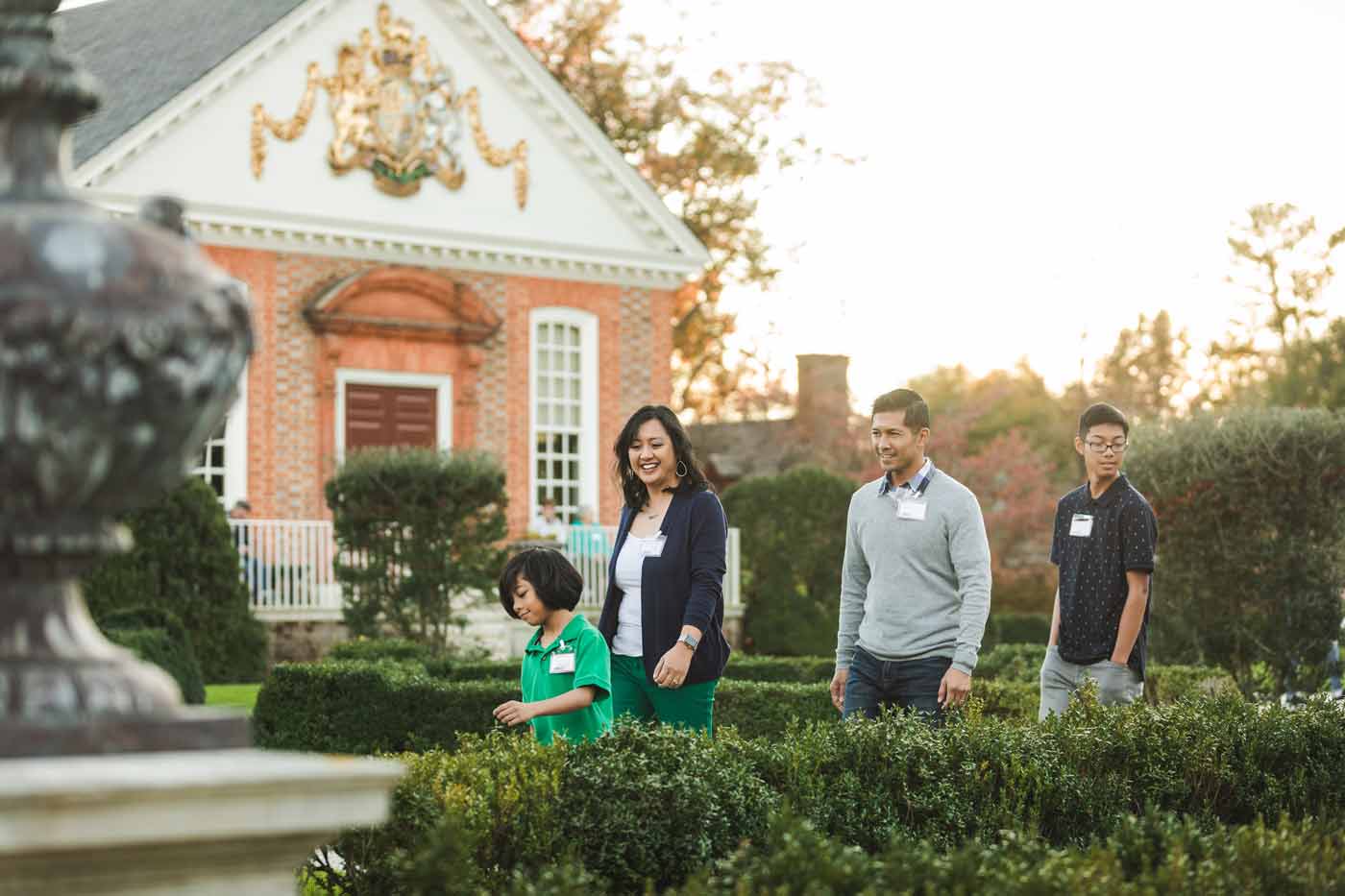
Colonial Williamsburg's print collection provides our historians with examples of Baroque garden design, like that originally planned for the Wren Building, right. Other prints evidence the range of tulip varieties available to ambitious colonial gardeners who could afford these luxury items. Out of these various sources, the 20th-century restored city arose, as seen in the reconstructed Governor's Palace below.

Tulips, Plate X, Temple of Flora, Robert Thornton, published 1812. Special Collections, John D. Rockefeller Library, Colonial Williamsburg Foundation

View of the Governor's Palace, Samuel Chamberlain, ca. 1938
Multimedia and related links
-
Podcasts
- View descriptions
-
Sharing a Love of the Garden
Wesley Green loves to share his knowledge of 18th-century plants with visitors of all ages in the colonial garden on Duke of Gloucester Street. May 29, 2006
Audio podcast: Listen (mp3) | Transcript
Image enhanced: View (m4a) | Transcript
-
Flowers and Herbs of Early America
Gardener Larry Griffith and Photographer Barbara Lombardi summon botanic phantoms and capture their essence on film. May 11, 2009
Audio podcast: Listen (mp3) | Transcript
Image enhanced: View (m4a) | Transcript
-
Christmas in Williamsburg
Doors are decked in Williamsburg's signature style to celebrate the holiday season. Laura Viancour describes the preparations. December 1, 2008
Audio podcast: Listen (mp3) | Transcript
Image enhanced: View (m4a) | Transcript
Video podcast: Watch (mov) | Transcript
-
Wren's Formal Garden
After three summers of digging, archaeologist Steve Archer hits pay dirt. October 15, 2007
Audio podcast: Listen (mp3) | Transcript
Image enhanced: View (m4a) | Transcript
-
Natural History
A foreign landscape is revealed to a curious world by naturalist Mark Catesby. Interpreter Robb Warren talks about the man and his art. June 16, 2008
Audio podcast: Listen (mp3) | Transcript
Image enhanced: View (m4a) | Transcript
- more...
- Quicktime 7 (free) is required to view the enhanced and video podcasts.
- Subscribe to our podcast RSS feeds:
Audio | Image enhanced | Video