Page content
Please contact Mfa Ltd at 212-528-1691 or cwfpress@mfaltd.com for high resolution or additional image options.
Colonial Williamsburg's "A Salute to the Nation" is a dramatic presentation of the
inspiration behind the very idea of America featuring Colonial Williamsburg's Fifes
and Drums and concluding with fireworks. The program spans 250 years of ideas that
have created a unique spirit and identity - the American identity - in its infinite
variations.
Low-res (72 dpi)
"RevQuest: Sign of the Rhinoceros" is an alternate reality game that challenges participants
to save the revolution. Players must solve a mystery that helps to avert a crisis
that could change the course of history in Revolutionary War-era Williamsburg.
Low-res (72 dpi)
Colonial Williamsburg's guests discover the inspiring story of Africans and African
Americans during the American Revolution. In 1775, 52 percent of Williamsburg's population
was of African descent, most of whom were legally considered slaves. Throughout Colonial
Williamsburg's Historic Area, their individual and collective stories reveal people
filled with courage and determined to persevere.
Low-res (72 dpi)
The program, Workin' the Soil, Healing the Soul, explores the the reconstructed 18th-century
rural plantation, Great Hopes. From the slave house to the fields, guests experience
a compelling look at day-to-day living for enslaved rural families.
Low-res (72 dpi)
The Run for the Dream Half Marathon and 8K Run/Walk returns to Colonial Williamsburg's
Historic Area May 20, 2012. The Fit to Run, Fit to Dream 8K Run/Walk will take place
the same weekend on Saturday, May 19, 2012. Armed Forces Day is May 19, 2012, and
the 8K will honor Wounded Warriors and our nation's military personnel and veterans.
Both races start on the campus of The College of William and Mary, wind through Colonial
Williamsburg's Historic Area and finish at William and Mary's Zable Stadium. The half
marathon course also takes runners on the Colonial Parkway to the James River before
returning to the City of Williamsburg and the campus.
Low-res (72 dpi)
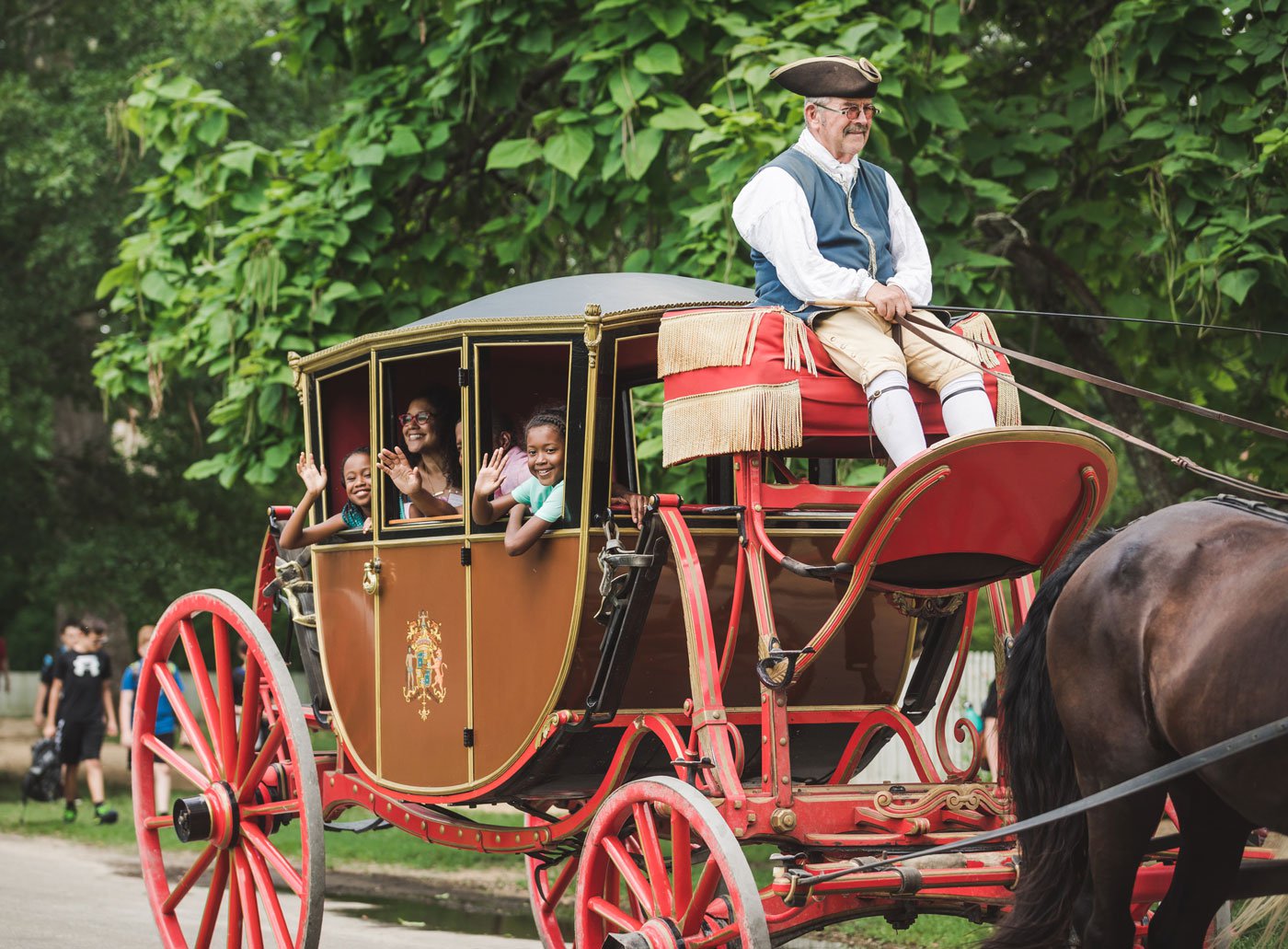
For more than 50 years, Colonial Williamsburg's guests have enjoyed touring Duke of
Gloucester Street in the manner and fashion of the 18th century, as passengers in
a horse-drawn coach. Of the 10 carriages owned by the Foundation, seven carriages
are reserved for the use of guests and visiting dignitaries, while the rest serve
as interpretive vehicles for re-enactments and special programming.
Low-res (72 dpi)
Colonial Williamsburg's award-winning street drama - The Revolutionary City - returns
for a seventh season in 2012. The live, interactive, family-friendly outdoor drama
takes place on the same streets where these events unfolded more than 230 years ago.
Low-res (72 dpi)
During Colonial Williamsburg's Revolutionary City program, costumed interpreters read
the Declaration of Independence at the Capitol.
Low-res (72 dpi)
During Colonial Williamsburg's Revolutionary City, guests experience the challenges
of creating a new self-governing society. As both free and enslaved cope with the
effects of war profiteering, rampant inflation and other hardships, they ponder their
loyalties and what the future holds.
Low-res (72 dpi)
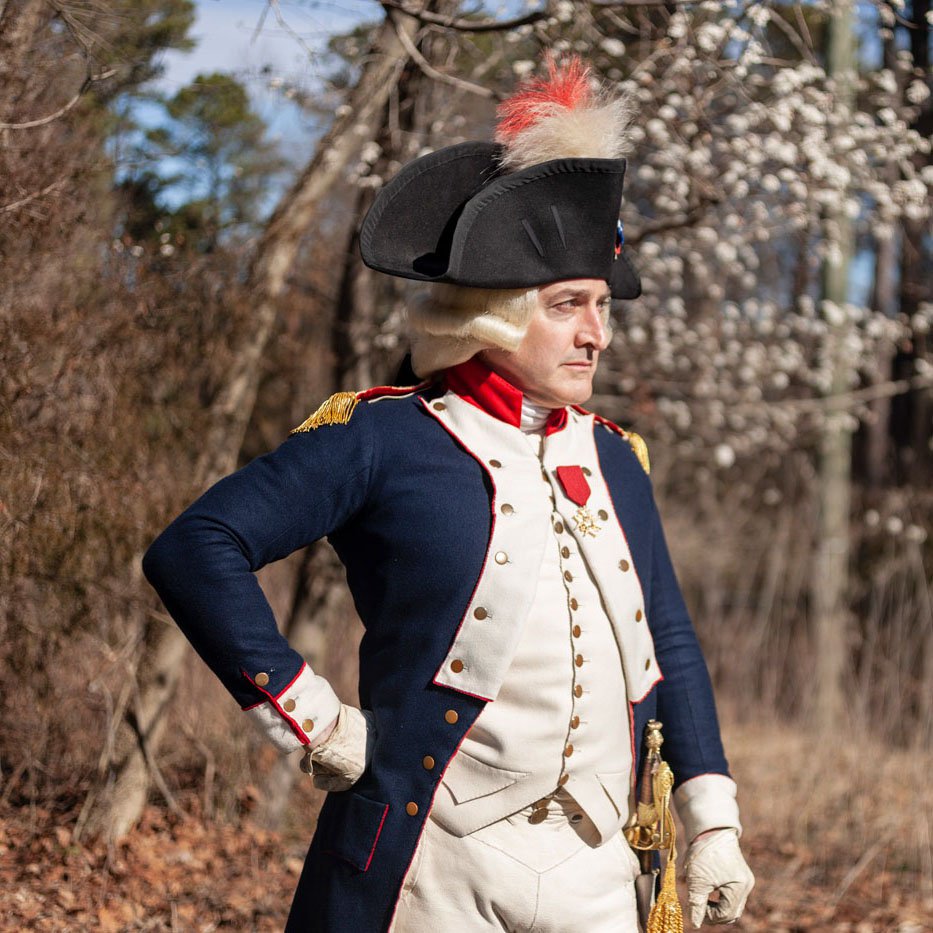
The Marquis de Lafayette addresses the citizens concerning the impending battle at
Yorktown. Guests can join in the march to the Courthouse where the troops are reviewed.
Low-res (72 dpi)
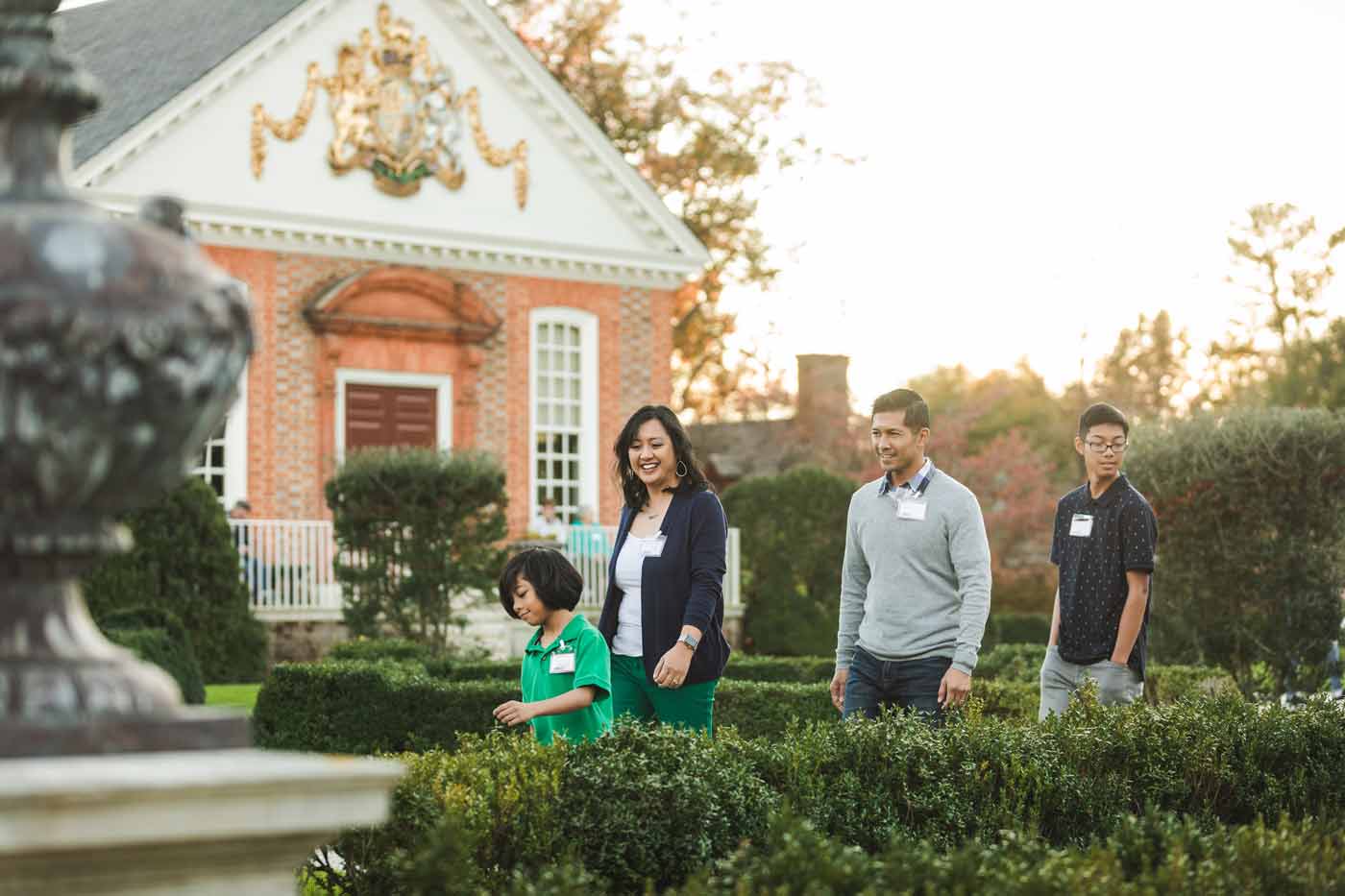
During Colonial Williamsburg's special program, "His Excellency's Pleasure Garden,"
Royal Governor Lord Dunmore hosts a party to welcome his wife Lady Dunmore to her
new home in Virginia. Guests meet Lord and Lady Dunmore and rub elbows with 18th-century
Virginia's finest colonial society. Guests enjoy a myriad of diversions and have the
opportunity to dance in the Governor's Palace gardens.
Low-res (72 dpi)
During Colonial Williamsburg's evening program, "Cry Witch," guests are invited to
question the witnesses, weigh the evidence and determine the guilt or innocence of
Grace Sherwood, "the Virginia Witch."
Low-res (72 dpi)
Colonial Williamsburg's evening program, "Papa Said, Mama Said," features enslaved
people who share their recollections of stories that teach moral lessons that have
been passed down from generation to generation.
Low-res (72 dpi)
On the Fourth of July, guests walk the streets where Thomas Jefferson, author of the
Declaration of Independence, once walked and celebrate more than 250 years of freedom
with family programs, music from Colonial Williamsburg's Fifes and Drums, and fireworks.
Low-res (72 dpi)
This beautiful Colonial Revival garden next to Christiana Campbell's Tavern features
a geometric pattern with nine planting beds and a tiered topiary yaupon holly in the
central circle. Flowering dogwoods, oak leaf hydrangeas and red cedars create seasonal
interest.
Low-res (72 dpi)
Gardens and outbuildings were mentioned in the recorded deeds for this original house.
Today, the pleasure garden with seasonal color provides an attractive foreground to
the orchard's fruit trees, pleached arbors and the original brickbat paths.
Low-res (72 dpi)
The complex of gardens at Colonial Williamsburg's Governor's Palace, spread over 10
acres, resembles English country estates during the reign of King William III and
Queen Mary II. Three original features from the 18th century remain: the ice mount,
the falling gardens (terraces) and canal.
Low-res (72 dpi)
Colonial Williamsburg is reconstructing the industrial site that helped forge the
American Revolution. When complete, Anderson's Blacksmith Shop and Public Armoury
will reflect the complexity and urgency of mounting a war effort against the world's
most powerful 18th-century nation. Here, carpenter Ted Boscana gives guests updates
on the working being done.
Low-res (72 dpi)
Historic tradesmen raise a wall of Colonial Williamsburg's Public Armoury's kitchen.
Low-res (72 dpi)
Colonial Williamsburg's Historic Trades helped with the construction of the Public
Armoury. Clapboard carpenter Ayinde Martin removed the bark from a log. The log was
used in the construction.
Low-res (72 dpi)
Several carpenters worked to put the framework on Colonial Williamsburg's Public Armoury
site in place. They are: (top row, left to right) Danny Whitten, clapboard carpenter;
carpenter Jack Underhill, Steve Chabra, clapboard carpenter; and (bottom row, left
to right) carpenter Corky Howlett, joiner/carpenter Ted Boscana, carpenter Bobby Clay,
carpenter Garland Wood and intern Cameron Green.
Low-res (72 dpi)
Reconstruction at Colonial Williamsburg's James Anderson's Blacksmith Shop and Public
Armoury required not one, but two brick firings. The first firing, in July, produced
about 9,000 bricks. In November, fires were lit for a second time, as 12,000 bricks
were readied for use in the Armoury outbuildings.
Low-res (72 dpi)
Colonial Williamsburg's James Anderson Blacksmith Shop made 25,000 nails to reconstruct
the Armoury. Each nail took 15 seconds to make with a total of 105 hours. The weight
of the nails was 686 pounds.
Low-res (72 dpi)
In 1776 James Anderson's appointment as Virginia's Public Armourer sparked the transformation
of his modest blacksmithing business into a booming industrial operation. Over the
next four years Anderson's two forges would become seven, and his workforce would
grow from six men to 40 with the addition of gunsmiths, gunstockers, tinsmiths, nail-makers
and blacksmiths. These men were Americans of European and African descent, Scottish,
and French, imprisoned, enslaved, apprenticed and free. Together they undertook the
challenge of maintaining arms for Virginia's soldiers, and supplying iron, steel and
tin work for the war effort. By the early 20th century, all evidence for this important
industrial operation had vanished. Since that time, however, eight archaeological
excavations have contributed details about the property's appearance and the variety
of work accomplished here.
Low-res (72 dpi)
Carpenters loaded timbers for Colonial Williamsburg's Armoury site into an ox cart
at the Ayscough House. The oxen moved the timbers through Duke of Gloucester Street
to the Armoury site.
Low-res (72 dpi)
Colonial Williamsburg's award-winning DeWitt Wallace Decorative Arts Museum houses
the Foundation's renowned collection of British and American fine and decorative arts
dating from 1600 through 1830. Masterworks and period pieces acquired for Colonial
Williamsburg's Historic Area exhibition buildings bolster the museum's holdings in
furniture, metals, ceramics, glass, paintings, prints, maps, tools, weapons, numismatics
and textiles. The full-length portrait of George Washington by artist Charles Wilson
Peale was painted in 1780 and was a gift of John D. Rockefeller Jr.
Low-res (72 dpi)
The exhibition, "Material Witnesses: Quilts and their Makers," now on view at Colonial
Williamsburg's Abby Aldrich Rockefeller Folk Art Museum, features 12 quilts and three
woven coverlets. It also has a hands-on activity that allows young guests to create
their own quilt designs with wooden blocks of different shapes and colors.
Low-res (72 dpi)
The Art Museums of Colonial Williamsburg feature several programs for young guests
that give them the opportunity to create a souvenir of their visit. The drop-in program,
"Art Stop," is one of many programs that allows families to create a piece of art
inspired by objects in the collection to take home.
Low-res (72 dpi)
The exhibition, "Quilts in the Baltimore Manner," features quilts noted for their
strong design, excellent craftsmanship and brilliant colors. The designs of Baltimore
influenced the wider community of quilters, including areas beyond Baltimore, such
as Northern Virginia. This exhibit features 12 quilts from Baltimore and surrounding
areas, dating from the 1820s through the 1860s. The exhibition opens in May at Colonial
Williamsburg's Abby Aldrich Rockefeller Folk Art Museum.
Low-res (72 dpi)
"Richard Newsham's Fire Engine" explores fire and fire fighting in the 18th century
with the display of an original fire engine built in the mid-18th century, and on
view for the first time. Initially granted a patent on December 26, 1721, Richard
Newsham's "new water engine for quenching and extinguishing fires" became the clear
choice for anyone in England or America who was serious about combating the flames.
So effective were Newsham's engines that some were used for more than a century. The
exhibition opens Feb. 18, 2012, in the DeWitt Wallace Decorative Arts Museum.
Low-res (72 dpi)
"Tall Case Clocks" is an exhibition of more than 20 clocks from the Colonial Williamsburg
collection. The dual importance of a clock's monetary value and family importance
have made them the ideal object to be passed down through generations as family heirlooms.
This exhibit will explore the clock mechanism and wooden casework, the history of
the form, the trade practices of the makers, ownership and cost, and showcase a group
of Southern clocks. The exhibition opens April 7, 2012, in Colonial Williamsburg's
DeWitt Wallace Decorative Arts Museum.
Low-res (72 dpi)
The 18th-century capital of Virginia played an important role during the American
Civil War. Williamsburg witnessed both the Northern and Southern armies, and experienced
a tragic battle on its doorstep. Colonial Williamsburg's "Williamsburg Civil War Tour"
explores major Civil War sites of the town. During the one-hour walking tour, guests
learn about some of the people who were here and Williamsburg's role in this heart-rending
period of America's history.
Low-res (72 dpi)
Colonial Williamsburg's Electronic Field Trip season continues with the premiere of
"When Freedom Came." In this sesquicentennial year of the Civil War, students discover
how enslaved Americans made everyday choices during the Civil War that helped bring
about their freedom. Freedom came to enslaved people in different ways and different
places over the course of many months and years.
Low-res (72 dpi)
A generation after the Revolution, Americans were once again plunged into war with
Great Britain. Students join Henry Clay, Tecumseh, Andrew Jackson, James Madison and
others as they struggle to determine what course the United States will take during
Colonial Williamsburg's electronic field trip, "The War of 1812."
Low-res (72 dpi)
Colonial Williamsburg's electronic field trip, "The Rights of Youth," returns during
the 2011-2012 season. Imprisonment, whipping, forced transportation and even death
were some of the punishments to which courts sentenced children in the 18th century.
Students witness how justice was administered at a time when criminal laws and sentencing
guidelines made few or no exception for children.
Low-res (72 dpi)
A new book co-published by The Colonial Williamsburg Foundation and Rodale Inc. introduces
today's gardeners to the art of the well-ordered 18th-century kitchen garden. In "Vegetable
Gardening the Colonial Williamsburg Way," historic gardener Wesley Greene mixes history
and folklore with practical advice on growing vegetables and herbs.
Low-res (72 dpi)
Colonial Williamsburg garden historian Don McKelvey shades cucumbers depicted in 18th-century
technique. "Vegetable Gardening the Colonial Williamsburg Way" features tips from
Colonial Williamsburg's experts.
Low-res (72 dpi)
Broad beans can be grown in rows or in a rectangular bed. For row planting, plant
the seeds with a dibble one to two inches deep, six inches apart, in rows two feet
asunder. For beds, plant the seeds on six-inch centers. Water well.
Low-res (72 dpi)
Carrots require a deep loose soil to form well-shaped roots. Lime is beneficial in
acidic soils.
Low-res (72 dpi)
Historic Jamestowne is the site of the first permanent English settlement in America.
The site is jointly administered by the National Park Service and The Colonial Williamsburg
Foundation on behalf of Preservation Virginia.
Low-res (72 dpi)
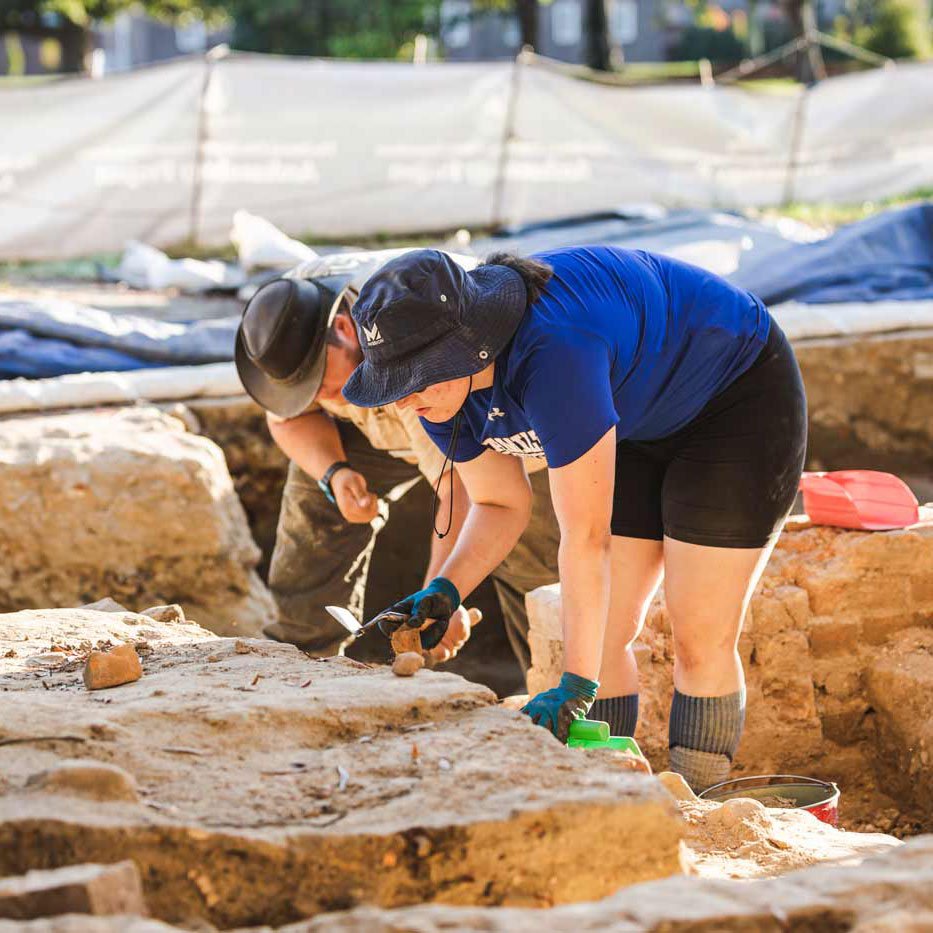
Archaeology and collections at Jamestown highlight distinctive cultures and early
encounters between diverse peoples. Colonial Williamsburg's archaeological collections,
including 17th- and 18th-century sites, create further opportunities to explore relations
between peoples from three continents during the colonial era.
Low-res (72 dpi)
Young guests at Historic Jamestowne learn how to muster as part of children's activities.
Low-res (72 dpi)
"The Walking Statue, or The Devil in the Wine Cellar," a fast-paced farce full of
disguises, deceptions and devils, is the newest production in Colonial Williamsburg's
18th-century Play Series but has entertained audiences on both sides of the Atlantic
since 1710. It is sure to delight audiences with historically accurate costumes, sets
and occasionally bawdy wordplay.
Low-res (72 dpi)
Merchants Square, the shopping and dining district adjacent to Colonial Williamsburg's
renowned Historic Area, is home to more than 40 shops and restaurants. David Everett's
The Trellis Restaurant is one of the eateries guests can choose from in the Square.
Low-res (72 dpi)
Binns, a boutique store with luxuries from around the world, features the latest in
women's fashions from sportswear and dresses to special occasion, shoes, accessories
and cosmetics. Merchants Square is recognized as one of the first planned shopping
malls in the United States. In 2005, Merchants Square was added to the National Register
of Historic Places along with the Williamsburg Lodge and the Williamsburg Inn to make
up the Merchants Square and Resort Historic District.
Low-res (72 dpi)
The Cheese Shop, family owned and operated since 1971, features hundreds of imported
and domestic cheeses, freshly baked breads, wines and sandwiches.
Low-res (72 dpi)
Wythe Candy and Gourmet Shop is a must-stop shop for guests with a sweet tooth! The
newly remodeled shop offers the region's best selection of candy. Merchants Square
properties are owned by Colonial Williamsburg with the majority leased to private
business owners.
Low-res (72 dpi)
The Williamsburg Farmers Market in Merchants Square features growers and producers
of Eastern Virginia selling fresh seasonal food and farm products directly to the
residents and visitors in the Greater Williamsburg area.
Low-res (72 dpi)
The Williamsburg Inn, the landmark property conceived and built by John D. Rockefeller
Jr. and opened in April 1937, has been the crown jewel of Colonial Williamsburg's
hotels for 75 years. Guided by the Inn's rich history and strong sense of place, and
led by an accomplished team of architects, craftsmen and artisans faithful to Rockefeller's
original vision, the Inn's meticulous and extensive renovation in 2001 brought refreshed
vibrancy and elegance to the comfortable Virginia country estate for discriminating
guests. The facade of the Williamsburg Inn changes with the seasons, here in spring
with tulips and buds bursting forth on the trees.
Low-res (72 dpi)
This image was taken in 1937 shortly after the Williamsburg Inn opened.
Low-res (72 dpi)
One of the Williamsburg Inn's richest and most elegant spaces, the Regency Room incorporates
period design elements from the Royal Pavilion at Brighton, England. Located in the
Inn's West Wing, the Regency Room's design details include Egyptian palm-leafed columns,
crystal chandeliers, rich silk draperies and leather-upholstered dining chairs. Reminiscent
of the rooms in the Brighton Pavilion, the walls feature hand-painted oriental panels
with a tree of life design of peonies and birds. Appropriately, the room's striking
garden and lawn views are evocative of the English countryside. Table settings include
gold-rimmed dinnerware and elegant hem-stitched table linens.
Low-res (72 dpi)
Added to the Williamsburg Inn during the 2001 restoration, the Restoration Bar is
clubby, comfortable yet reflective of the formal Regency period style. Original 1937
architectural drawings by Perry, Shaw and Hepburn, the Boston architects selected
by John D. Rockefeller Jr. to restore Colonial Williamsburg, are the décor focus
throughout the bar. The walls are painted in soothing Williamsburg "Thomas Everard
Coffee," and accented with hand-tooled gold leaf leather borders. After a fruitless
search for the perfect barstools and bar tables, resident interior designer Susan
Winther commissioned these by Harrison Higgins Cabinetmaker of Richmond, Va. The
rug is by Couristan, and the lounge chairs are by Trouvailles.
Low-res (72 dpi)
Each guest room in the Williamsburg Inn has its own individual personality with original
artwork, different accessories and furnishings reflective of a gracious old Southern
home that makes it truly unique. Wood-burning fireplaces, canopy beds, seating areas
and windows that open onto a terrace are among the choices of the Inn's 62 rooms.
Low-res (72 dpi)
The Williamsburg Inn's guest rooms are exquisitely decorated in three distinctive
styles: floral, classic and restoration. All rooms feature period furnishings of Honduras
mahogany (many pieces are original to the hotel), original artwork and the handmade
silk window treatments that have been a Williamsburg Inn signature for decades. Handcrafted
in a Colonial Williamsburg workshop, they feature rich silk fabrics, luxurious trim
and delicate handmade tassels. Complementing the floor-to-ceiling window treatments
are beautifully upholstered easy chairs in silk damask.
Low-res (72 dpi)
This bedroom is part of a suite of rooms occupied by Her Majesty Queen Elizabeth II
and Prince Philip during their May 2007 stay in the Williamsburg Inn. The chest of
drawers and lamp between the windows are original to the Inn. The wing chairs were
manufactured by Kittinger Furniture, upholstered in silk blend damask. The valance
and drapery behind the bed were constructed for the queen's visit. A gilded cornice
board with a rosette motif tops the valance with festoons of silk brocade of Robert
Adam-inspired design in cream with accents of soft green, gold and rose. The window
and bed valance boards are covered in a soothing taupe color in slipper satin silk
textile - the same fabric used for the bed drapery, all of which were made by Colonial
Williamsburg seamstresses. The urn-shaped lamps on the night stands are typical of
many accent pieces in the Inn. Many of the Inn's original furnishings are a blend
of the American Federal and English Regency periods and were manufactured by Kittinger.
The furnishings are influenced by the designs of Robert Adam, George Hepplewhite,
Thomas Sheridan and others whose neoclassical designs included classic elements reminiscent
of early Greek and Roman designs.
Low-res (72 dpi)
The Regency Room in the Williamsburg Inn makes an elegant setting for a meeting, and
with a view of the Golden Horseshoe Gold Course behind the speaker, meeting attendees
may daydream a bit.
Low-res (72 dpi)
For 75 years, Colonial Williamsburg has been synonymous with hospitality, as these
guests checking in to the Williamsburg Lodge are experiencing.
Low-res (72 dpi)
Executive Chef Rhys Lewis leads the culinary team at the Lodge, where the dinner menu
is an ode to the bounty of Virginia with starters of local river oysters, she crab
soup or Mobjack shrimp cocktail followed by salads from Virginia gardens. A selection
of just the right wines from Virginia and across the country accompanies any meal.
Chef Rhys is the instructor for "Wine, Wit and Wisdom," a popular wine tasting and
pairing held during the holidays at the Williamsburg Lodge.
Low-res (72 dpi)
Executive Chef Rhys Lewis and his culinary team have created a menu that appeals to
families and foodies and is served in the comfortable setting of the restaurant that
overlooks a courtyard full of wildflowers and an herb garden.
Low-res (72 dpi)
The fireplace in the Lobby Lounge is the perfect setting for a game of checkers, a
cocktail, reading or relaxing in the comfortable furnishings reminiscent of a gracious
family home.
Low-res (72 dpi)
The all-new conference center at the Williamsburg Lodge opened in September 2006.
A premier conference choice in the mid-Atlantic, the Lodge is a prime location for
banquets, meetings and weddings. The facility offers leisure and conference guests
a generous helping of Southern hospitality, impeccable service and special amenities
with 45,000 square feet of meeting and banquet space, an 11,200-square-foot ballroom
(Virginia Room), a 6,700-square-foot ballroom (Colony Room), 28 meeting rooms and
four outdoor function areas.
Low-res (72 dpi)
A Williamsburg Lodge chef prepares culinary delights in the open kitchen in front
of the main Lodge dining room.
Low-res (72 dpi)
Rooms in the Williamsburg Lodge are inspired by the folk art in Colonial Williamsburg's
Abby Aldrich Rockefeller Folk Art Museum. The coverlets on the pencil post king beds
in this room are inspired by 19th-century Ohio coverlets on loan to the collection.
Low-res (72 dpi)
Chowning's Tavern offers guests a comfortable gathering spot to enjoy simple and delicious
food, spirits and beverages. Chowning's offers casual quick fare daily in the tavern
garden, weather permitting.
Low-res (72 dpi)
In the evening, Chowning's full menu featuring main courses to satisfy townspeople
and travelers alike is available from 5- 9 p.m., when guests can experience Gambols
- with a lighter fare of barbecued rib bites, soup, salad, pulled pork and desserts.
Featured beverages include stout rum drinks, a variety of hearty ales, including Old
Stitch - brewed using an 18th-century recipe - and Virginia wines by the glass. Balladeers
lead guests in rousing period sing-alongs, and costumed servers provide instructions
for playing popular games of the day - a perfect way to end a "historic" day. Chowning's
Tavern is located near Colonial Williamsburg's Market Square on Duke of Gloucester
Street.
Low-res (72 dpi)
Christiana Campbell's Tavern was a favorite of well-known colonial Virginians such
as George Washington and Thomas Jefferson. Servers of the tavern are on hand to recount
stories of George Washington's favorable diary entries about Mrs. Campbell's establishment
and other noteworthy tales about the colonial tavern. Dinner reservations are required,
and free parking is available behind the tavern, located today on Waller Street across
from the Capitol in Colonial Williamsburg's Historic Area.
Low-res (72 dpi)
The Spa of Colonial Williamsburg occupies the Georgian Revival building that formerly
housed the Abby Aldrich Rockefeller Folk Art Museum. It is located steps from the
Williamsburg Lodge, Williamsburg Inn and Golden Horseshoe Golf Club, and is reached
by way of a brick walkway. Guests of the Inn, Lodge, Colonial Houses and Providence
Hall and Guesthouses have access to the indoor pool and fitness quarter. Spa services
may be booked by hotel guests or day visitors.
Low-res (72 dpi)
The pool area behind the Spa of Colonial Williamsburg makes a beautiful setting for
an evening reception or cocktail party.
Low-res (72 dpi)
A handcrafted cabinet provides storage and display space for products used in the
Spa of Colonial Williamsburg's nail salon, offering privacy to guests while still
allowing the natural light from outdoors to enter the area. Historical photographs
from the Library of Virginia are displayed throughout the spa. Ergonomic pedicure
stations allow guests to relax and technicians to pamper guests' feet without bending
or straining.
Low-res (72 dpi)
In the Spa of Colonial Williamsburg's conservatory salon, a bride enjoys a personalized
make-up session so she looks her very best on her special day.
Low-res (72 dpi)
The par-5 fifth hole on Colonial Williamsburg's Golden Horseshoe Green Course is a
dogleg right with sand bunkers and mounds lining the left side of the hole and a large
sculptured bunker on the right of the green.
Low-res (72 dpi)
This par-5 second hole on Colonial Williamsburg's Golden Horseshoe Gold Course offers
one of the most breathtaking views on the course from the crest of the hill on the
hole.
Low-res (72 dpi)
Colonial Williamsburg's nine-hole Spotswood is a par-31 course with nine holes and
18 sets of tees, offering a different challenge to those who want to play it as an
18-hole course. It was designed by Robert Trent Jones Sr. and measures 1,865 yards
with one 480-yard par 5, par 4s of 285 and 305 yards and six par-3 holes that vary
from 90 to 215 yards. This par-3 second hole requires a tee shot over a pond.
Low-res (72 dpi)
The par-3 third hole on Colonial Williamsburg's Golden Horseshoe Gold course is on
a diagonal with the water cutting across the front of the hole, and a bunker forming
a beach just before the green.
Low-res (72 dpi)
Designer Robert Trent Jones Sr. called the Golden Horseshoe Gold Course his "finest
design." The original green on the signature 16th hole is the last in a set of spectacular
par-3 holes. The green slopes from back to front and is surrounded by five bunkers.
Low-res (72 dpi)
The signature 16th hole on Colonial Williamsburg's Golden Horseshoe Gold course offers
two alternative tees - one from the right and one from the left. There are 10 pin
positions, all different and each difficult, making this one of golf's greatest short
holes anywhere.
Low-res (72 dpi)
With 45 holes of golf designed by Robert Trent Jones Sr. and his son Rees Jones, Colonial
Williamsburg's Golden Horseshoe Golf Club offers memberships, tournaments and lessons
for juniors and adults.
Low-res (72 dpi)
The Gold Course Grill offers a beautiful luncheon spot overlooking the 18th green
and a menu to please all ages.
Low-res (72 dpi)
* Please contact Mfa Ltd at 212-528-1691 or cwfpress@mfaltd.com for high resolution or additional image options.
Photo credit: Colonial Williamsburg Foundation, Williamsburg, Va.
These images may be used for editorial and educational purposes
only.
All commercial and advertising uses are strictly forbidden
without the written consent of
the Colonial Williamsburg Foundation.
© 2012 by The Colonial Williamsburg Foundation