Page content
View related multimedia and linksJames Geddy Foundry
Foundry reconstructed behind Geddy home
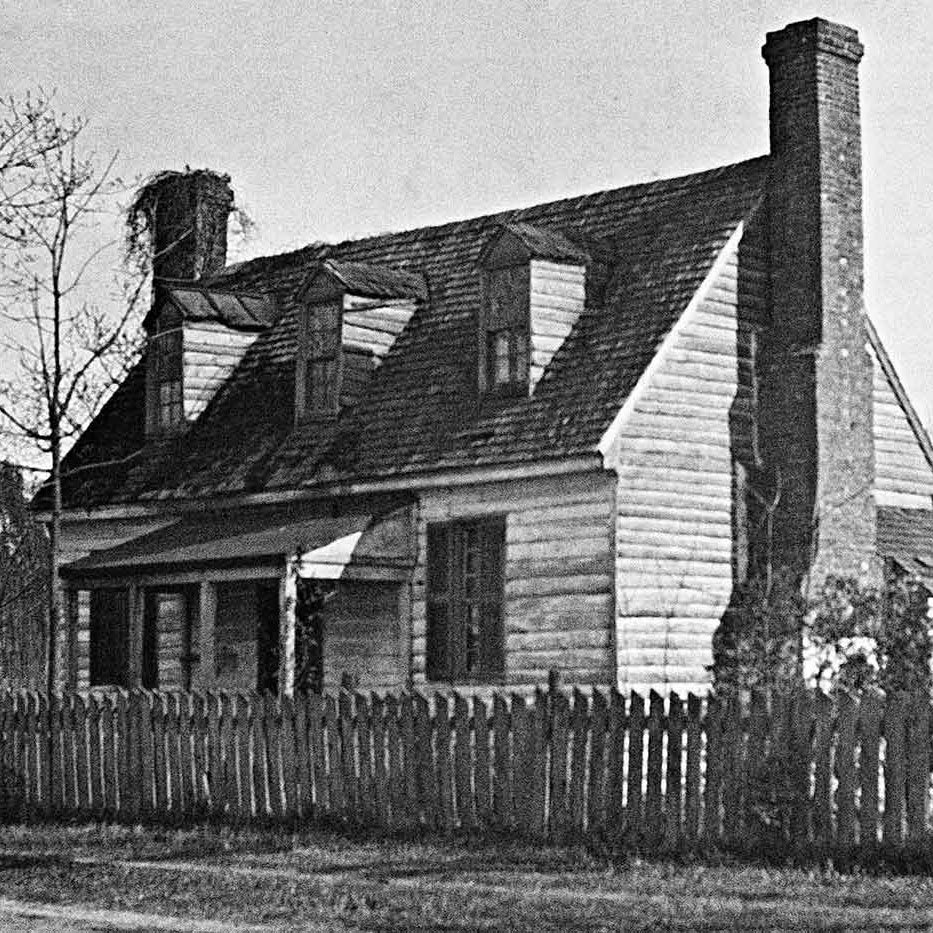
At the rear of the James Geddy House stands the reconstructed James Geddy Foundry. Prior to 1750, the brass founder's workshop where William, David, and James Sr. worked straddled two lots originally purchased by James Geddy Sr. In 1750, six years after her husband's death, Anne Geddy sold the east lot, forcing her sons to relinquish the workroom on the property to its new owner. Subsequently, the brothers built a workroom on the west side of the foundry.
Brothers continued and expanded father's trades
A 1751 advertisement in the Virginia Gazette indicates that David and William Geddy were partners, continuing their father's dual trades of gunsmithing and brass founding. In addition, the advertisement indicates that David and William were also skilled as buckle maker, cutler, and sword cutler. David's presence on the site and his role in the foundry after 1751 is open to question, since he does not appear in any records between then and the outbreak of the Revolution.
After 1760, when James Geddy Jr. purchased the house and lot from his mother and established his silversmith and jewelry business, William and David continued to operate the foundry as a separate enterprise, although they probably paid their brother rent.
William Jr. operated foundry for 30 years
The Geddy foundry had two masters (or owners), brothers William and David, and at least two apprentices, William's son William Jr., and an orphan named Thomas Dugar. An older man, John Dennis, was employed as a journeyman. It is not known whether William Geddy used slave labor in the foundry, but William Geddy Jr., did own a slave named Charles who was a blacksmith. There may have been others present in the shop as well. William preserved and expanded his father's business and operated it successfully for more than 30 years.
Shaping metal in the 18th century
In the 18th century there were two basic ways to shape metal: hammering it, which was generally the work of a smith, and casting it, the process of melting metal and pouring it into a mold, which was the work of the founder. Harder, more brittle metals, or those that are particularly fluid, were generally cast, whereas softer, more malleable metals were more likely to be hammered.
The shape of the article to be made was probably the most important factor in determining whether the metal would be hammered or cast. A bowl, a tray, or a cup would generally be hammered; a candlestick, a bell, a buckle, a watch key, or a spandrel for a clock would be cast. These and hundreds of similar articles in a variety of metals would have been produced in the foundry that the Geddy family operated for nearly 50 years. Artifacts of many of these articles were found in the 1968 excavations of the Geddy site.
Learn more:
Yard
James Geddy House
Brass founder's workshop
William and David Geddy
Long advertisement
Gunsmith
Founding
Sword cutler
Silversmith
Hammering
Candlestick
Buckle
Multimedia and related links
-
Podcasts
- View descriptions
-
Silversmith
Journeyman silversmith Preston Jones reflects on his 26 years of creating silver pieces. August 22, 2005
Audio podcast: Listen (mp3) | Transcript
Image enhanced: View (m4a) | Transcript
-
75 Years of Costume Design
Colonial Williamsburg marks 75 years of costumed interpretation in 2009. Costume Design Center Director Brenda Rosseau describes the metamorphosis from 1934. November 2, 2009
Audio podcast: Listen (mp3) | Transcript
Image enhanced: View (m4a) | Transcript
Video podcast: Watch (mov) | Transcript
-
Ghosts Amongst Us
Centuries-old phantoms linger in Colonial Williamsburg's Historic Area. Hear a tale from the "Ghosts Amongst Us" evening tour. October 26, 2009
Audio podcast: Listen (mp3) | Transcript
Image enhanced: View (m4a) | Transcript
-
Bruton Parish Churchyard
Individuals of all classes rest in the peace of the Bruton Parish graveyard. Church guide Anne Conkling describes one of America's oldest cemeteries. October 19, 2009
Audio podcast: Listen (mp3) | Transcript
Image enhanced: View (m4a) | Transcript
-
Horses in Williamsburg
Horses lend their speed and strength to the American colonies. Head coachman Joyce Henry shares the horse's role in early Virginia. October 12, 2009
Audio podcast: Listen (mp3) | Transcript
Image enhanced: View (m4a) | Transcript
Video podcast: Watch (mov) | Transcript
-
Bees in the Colonies
The humble honeybee sweetens the American story. Apiarist Bill Krebs says bees have been here since the beginning. October 5, 2009
Audio podcast: Listen (mp3) | Transcript
Image enhanced: View (m4a) | Transcript
- more...
- Quicktime 7 (free) is required to view the enhanced and video podcasts.
- Subscribe to our podcast RSS feeds:
Audio | Image enhanced | Video
-
Journal articles
-
"Our little colonial house"
Abby Aldrich Rockefeller and Bassett Hall
-
Cool, Calm, Clean
Dairies were the most elaborate of outbuildings, and the cleanest
-
Framing Williamsburg's Doors
-
Hexagons in Williamsburg
- more articles...

Shop Online