Page content
View related multimedia and linksFoodways
Dining experience important in colonial times
Food played a very important part in the social lives of 18th-century Virginians. Aside from providing basic sustenance, dining was also one of the most important ways that colonial Virginians exchanged information. The dining process might last for two hours in some upper-class households. It wasn't unusual for a conversation that began at a dinner table to continue well into the night. The taverns of Williamsburg also provided the food, drink, and atmosphere the helped propel the American Revolution. On numerous occasions, the Burgesses retired to one of Williamsburg’s many taverns to continue their political discussions with food and drink.
Governor's Palace served finest foods
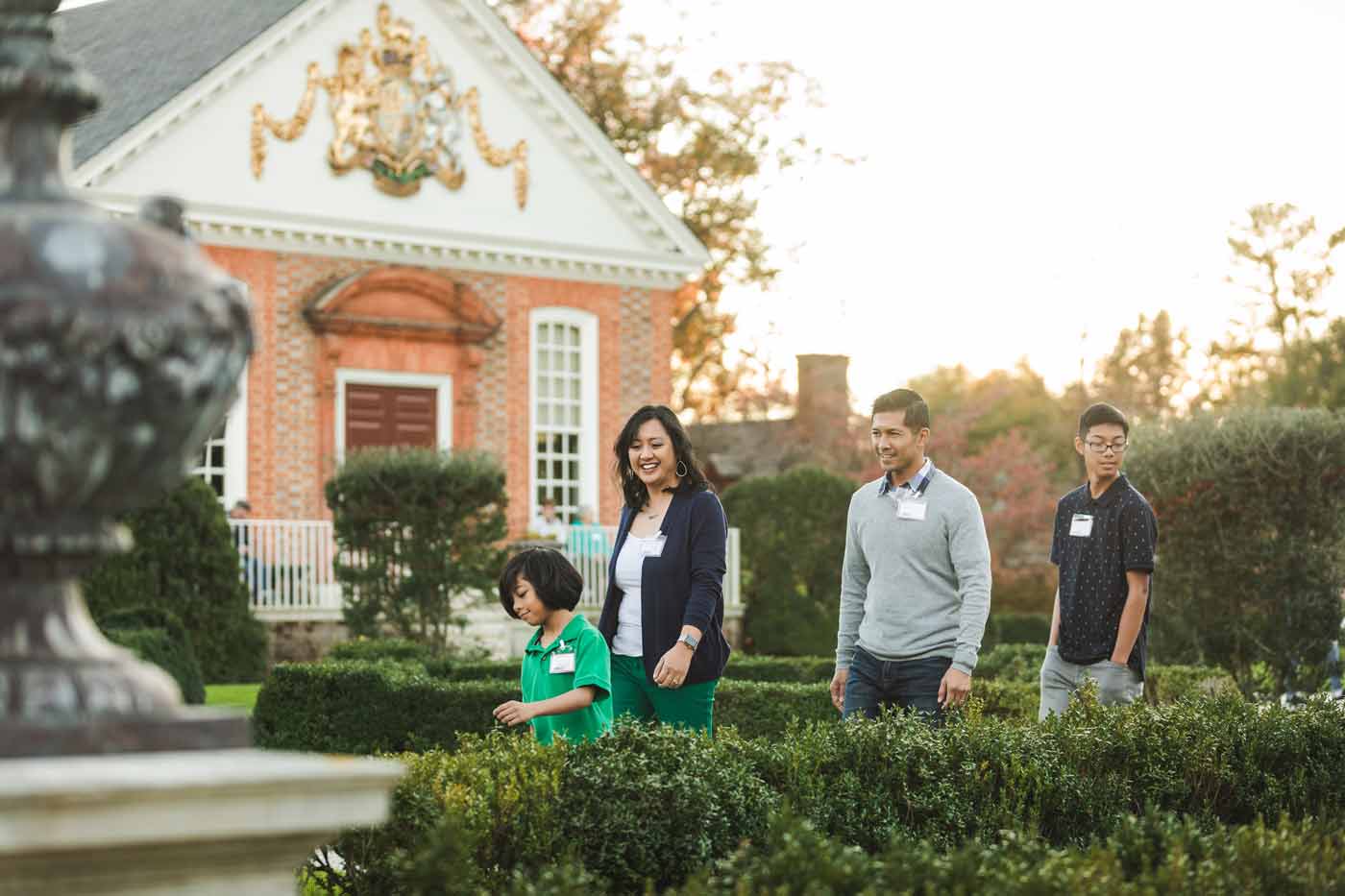
The foods and preparation techniques used by colonial Virginians varied depending upon the wealth and social standing of the citizenry. Meals at the Governor’s Palace served those at the pinnacle of social standing. The last two Royal governors employed professionally trained European cooks. Known as "principal cooks," these men were the highest paid servants on the property. They served an apprenticeship in Europe and had a level of training and skill unmatched in Virginia. The Governor was able to provide these cooks with the best-equipped kitchen in the colony. The governor’s cuisine reflected the French influence popular among upper class English society.
The household inventory for Governor Botetourt listed numerous copper pots, a spit jack, and an eight-day clock. Based upon the inventory, Colonial Williamsburg added a charcoal-burning stew stove to the Palace kitchen in 1994.
Gentry served food in English fashion
The Virginia gentry were next in wealth and status. They demonstrated their social standing by providing a wide variety of meats and sweets at each meal prepared in a more traditional English fashion. The Virginia gentry employed slave cooks who were less formally trained than the governor's cooks, but they were extremely skilled nonetheless. Highly skilled cooks were expensive and prized possessions. One slave cook who was known for her skill was Lydia Broadnax, who developed her reputation cooking for the Wythe family for many years and was eventually granted her freedom.
Middling class provided less variety
Next in social standing in the18th century were the middling class, who were less able to provide the variety and choices that the gentry could. They probably emulated the gentry when entertaining but ate more basic foods on a daily basis. The upper middling classes may have employed slave cooks, while the less well-off relied on the cooking talents of the mistress of the house.
Lower class prepared one-pot meals
Most colonial Virginians fell into the bottom rung of the social ladder. The poor were very limited in cooking equipment, often having only one cast iron pot. The wife of the house prepared basic soups and grain porridges. The most common type was hominy, made from corn, often flavored with salt-cured pork and vegetables. This basic diet was supplemented with whatever meats and vegetables they could obtain.
About the Department of Historic Foodways
The Department of Historic Foodways was created in 1983, with the purpose of researching and recreating the foods of the 18th century. The department currently operates daily in the Governor’s Palace kitchen and the Peyton Randolph kitchens. In addition to the kitchen cooking programs, Foodways also offers these special programs:
- "From Hog to Ham" – the butchering and curing of hams
- "The Arts and Mysteries of Brewing" – the world of colonial brewing
- "Secrets of the Chocolate Maker" – the processing and use of chocolate
The department runs demonstration kitchens at the Governor’s Palace and the Peyton Randolph House. Historic Foodways is currently involved in research on food-related topics including food preservation, brewing, dairying, and military foods. Another research project involves the creation of a cookbook, which will have 200 to 300 colonial "receipts," or recipes, in the original language and a contemporary adaptation allowing the recipes to be prepared at home. The Department of Historic Foodways is now led by Frank Clark.
Learn more:Multimedia and related links
-
Slideshows
- more...
-
Podcasts
- View descriptions
-
Colonial Chocolate
Journeyman cook Jim Gay explains that Americans' love of chocolate dates back to the beginning. February 9, 2009
Audio podcast: Listen (mp3) | Transcript
Image enhanced: View (m4a) | Transcript
Video podcast: Watch (mov) | Transcript
-
Telling the story of colonial women.
Kristen Spivey reveals some surprises about 18th-century women and their role in history. March 6, 2006
Audio podcast: Listen (mp3) | Transcript
Image enhanced: View (m4a) | Transcript
-
Carolyn Wilson on Interpreting an American Lady
Carolyn Wilson talks about her passion for what it means to be an American citizen and her love for interpreting Betty Randolph in Colonial Williamsburg's Historic Area. August 15, 2005
Audio podcast: Listen (mp3) | Transcript
Image enhanced: View (m4a) | Transcript
-
Weapons and Militia in 18th-Century Williamsburg
Military Interpreter Stewart Pittman talks about a company of 14-year-old boys who rob a booby-trapped Magazine and arm themselves with blue-painted muskets in 1775. He also answers some popular questions about musket firing and accuracy. September 11, 2006
Audio podcast: Listen (mp3) | Transcript
Image enhanced: View (m4a) | Transcript
-
Basketmaking: A Skill Learned With the Hands
Colonial Williamsburg basketmaker Richard Carr talks about the necessity of basketmaking in the 18th century, and why it has become a rare skill in modern times. November 20, 2006
Audio podcast: Listen (mp3) | Transcript
Image enhanced: View (m4a) | Transcript
-
The Brick Kiln
This October, the brick kiln in Colonial Williamsburg's Historic Area will burn for five days and nights. October 9, 2006
Audio podcast: Listen (mp3) | Transcript
Image enhanced: View (m4a) | Transcript
- more...
- Quicktime 7 (free) is required to view the enhanced and video podcasts.
- Subscribe to our podcast RSS feeds:
Audio | Image enhanced | Video
-
Games & Interactive
-
Games
-
Midnight Messenger
Help Li Ming deliver the silver tea pot to the ship.
-
Activities
-
Cooper-ation
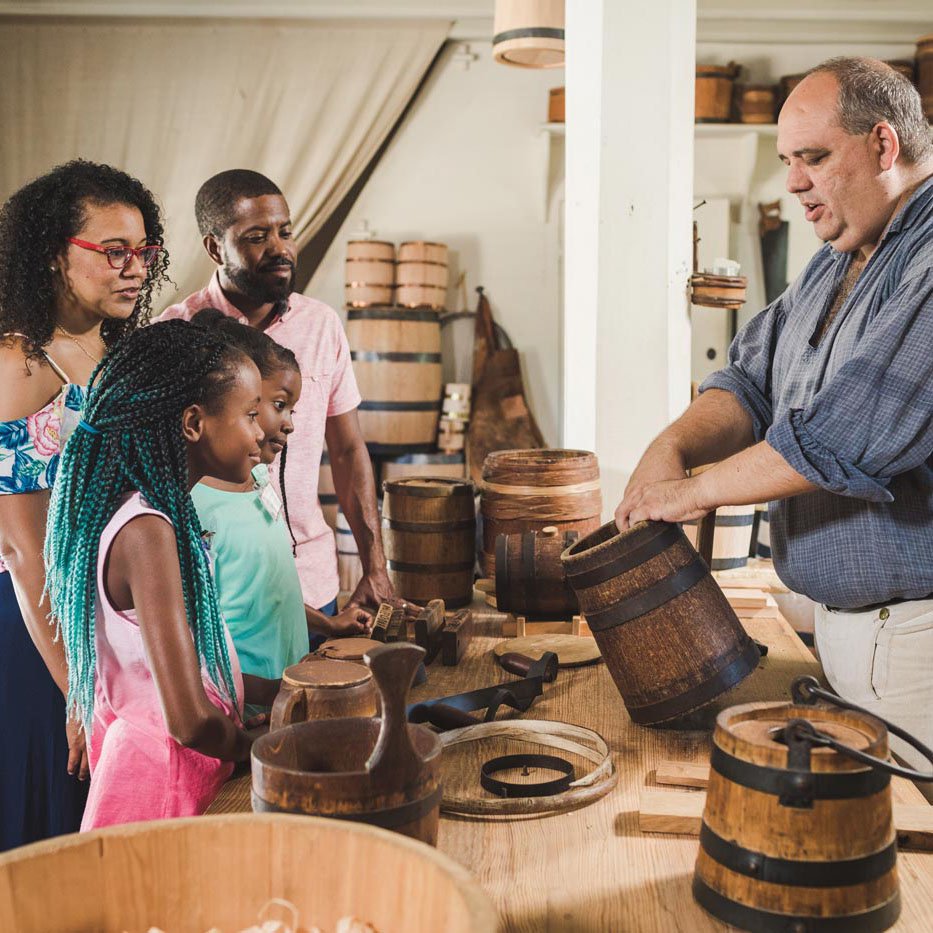
Help Ben find the cooper's tools so he can complete a cask.
-
Brickmaker Buildup
First place each important step in its correct order - then watch the fascinating art of brickmaking in action.
- more...
-
Downloads
-
Wallpapers
-
Shoemaker through a window
-
Teamwork
-
Screensavers
-
Tools of the Trades

From the article "Tools of the Trades" in the Winter 08 Journal
- PC download (7.1 Mb)
- MAC download (5 Mb)
- more...
-
Video
-
The Cabinetmaker

from the Carving a Ball-and-Claw foot, from the video "The Art and Mystery of the Cabinetmaker Crafting a Card Table" and the Summer 03 Journal
-
The Cabinetmaker

from the Working on a detail for a card table, from the video "The Art and Mystery of the Cabinetmaker Crafting a Card Table" and the Summer 03 Journal
-
The Cabinetmaker

from the Cutting a hinge for a card table, from the video "The Art and Mystery of the Cabinetmaker Crafting a Card Table" and the Summer 03 Journal
-
The Cooper Trade

from the A good barrel begins with a fine tree, from the video "The Cooper's Craft: The Art of Colonial Barrel Making" and the Autumn 03 Journal
- more...
-
Audio
-
Wages for tradespeople in the 1700s
From the Summer 2002 Journal: "Making "Cents" of Colonial Money"
- more audio...
-
Journal articles
-
Work, Work, and More Work
Middling Planters Took Hard Road to Wealth, Respectability in Colonial Virginia
-
When Whiskey Was the King of Drink
-
Rattle-Skull, Stonewall, Bogus, Blackstrap, Bombo, Mimbo, Whistle Belly, Syllabub, Sling, Toddy, and Flip
Drinking in Colonial America
-
Bogged Down in Cranberries
- more articles...