Page content
View related multimedia and linksVirginia's Famous Signers
" . . . we mutually pledge to each other our Lives, our Fortunes, and our sacred Honor."
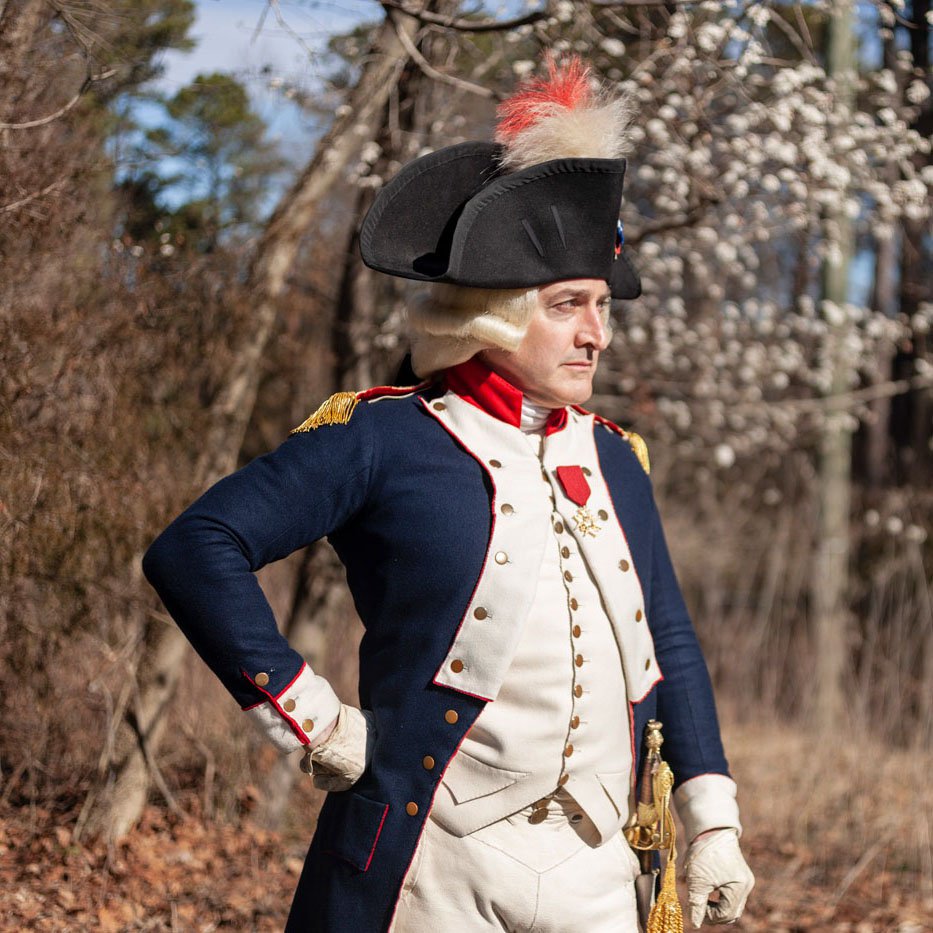
In the crucial decade before the American Revolution, Williamsburg was a training ground for a remarkable body of men. When it became clear that war with Great Britain could not be avoided, George Wythe, Richard Henry Lee, Thomas Jefferson, Benjamin Harrison, Thomas Nelson, Francis Lightfoot Lee, and Carter Braxton met in Philadelphia with representatives from other colonies to declare independence from the mother country. On July 4, 1776, the Continental Congress formally adopted the Declaration of Independence and took the first momentous step toward establishing a new nation.
George Washington did not sign the Declaration of Independence because in July 1776 he was in New York preparing to defend Manhattan against the British.
Multimedia and related links
-
Podcasts
- View descriptions
-
We hold these truths
Hear the words that started a war, read by Thomas Jefferson interpreter Bill Barker. Episode one of July's Revolutionary Documents series. June 30, 2008
Audio podcast: Listen (mp3) | Transcript
Image enhanced: View (m4a) | Transcript
-
A Slave's Perspective
The Declaration of Independence was a promise extended to white men only. Hope Smith portrays Eve, a slave in the Peyton Randolph house. July 16, 2007
Audio podcast: Listen (mp3) | Transcript
Image enhanced: View (m4a) | Transcript
-
The Slave Trade
The slave trade touched the lives of people around the globe, explains Colonial Williamsburg's Educational Program Development director Bill White. February 9, 2007
Audio podcast: Listen (mp3) | Transcript
Image enhanced: View (m4a) | Transcript
-
Mr. Wythe's Cook
Valarie Holmes interprets Lydia Broadnax - a cook for one of Williamsburg's most influential men. June 19, 2006
Audio podcast: Listen (mp3) | Transcript
Image enhanced: View (m4a) | Transcript
-
Emily James interprets spirited women
Jamaican-born Emily James has interpreted at least 16 different 18th-century women who learned how to survive lives of enslavement. February 27, 2006
Audio podcast: Listen (mp3) | Transcript
Image enhanced: View (m4a) | Transcript
-
Recalling African American Interpretation
Rex Ellis reflects on 25 years of interpreting the African American experience in the colonial period. February 6, 2006
Audio podcast: Listen (mp3) | Transcript
Image enhanced: View (m4a) | Transcript
- more...
- Quicktime 7 (free) is required to view the enhanced and video podcasts.
- Subscribe to our podcast RSS feeds:
Audio | Image enhanced | Video
-
Journal articles
-
Debating the Bill of Rights
"What No Government Should Refuse, or Rest on Inference"
-
Fighting... Maybe for Freedom, but probably not
Slaves and free blacks in the Revolutionary War
-
Slave Conspiracies in Colonial Virginia
-
Finding Slaves in Unexpected Places
Keeping Blacks in Bondage Was Not a Southern Monopoly
- more articles...

Shop Online